Health and Safety Policy — Skip Hire Addiscombe
 Skip Hire Addiscombe is committed to maintaining the highest standards of health and safety across all operations related to skip hire, waste removal and rubbish collection. This policy sets out our approach to managing risks associated with the delivery, placement, loading and collection of skips and allied services. The purpose is to protect employees, contractors, customers and members of the public while ensuring that our skip hire services operate efficiently and responsibly.
Scope: This policy applies to every activity carried out by the skip hire company and its contractors, including skip hire services, site management, haulage, recycling and disposal coordination. The policy covers manual handling, vehicle movements, hazardous waste segregation, public safety during on-street placements and safe operation of lifting and loading equipment. All staff and operatives are required to be familiar with these requirements and to follow safe working practices at all times.
 Responsibilities and roles: The management team retains overall responsibility for health and safety. Supervisors, drivers and operatives have day-to-day responsibility for ensuring that the policy is implemented. Key responsibilities include:
- Risk assessment: Carry out and review risk assessments for all skip placements and associated tasks.
- Training: Ensure employees receive appropriate training and instruction in manual handling, vehicle safety and hazardous materials handling.
- Equipment: Maintain tools, lifting gear, vehicles and personal protective equipment to industry standards.
Risk management and safe systems of work: Before any skip is placed, a site survey must be conducted to identify hazards such as underground services, overhead wires, restricted access points and pedestrian routes. A safe system of work will be established that considers rubbish removal operations, traffic management, and segregation of waste streams. A permit-to-work approach is adopted for complex or high-risk placements.
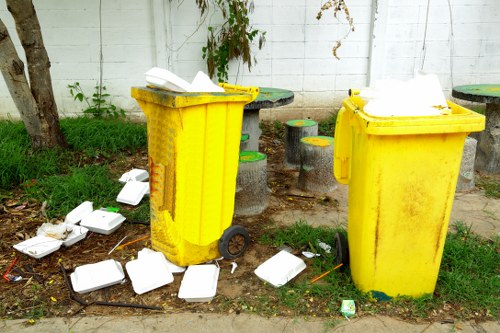 Operational controls: The following measures are mandatory for all operatives:
- Vehicle safety: Use reversing alarms, banksmen and clear signage to manage vehicle movements during delivery and collection.
- PPE: Wear hi-visibility clothing, gloves, steel-toe footwear and eye protection when handling waste or operating machinery.
- Segregation: Segregate hazardous materials and ensure that prohibited items (e.g., asbestos, certain chemicals) are not placed in general rubbish skips.
Training and competence: All staff involved in skip hire operations must receive training appropriate to their role. This includes instruction on manual handling techniques, safe loading practices to avoid overloading, correct securing of loads for transport and the identification of hazardous wastes. Records of training and competency assessments are maintained and reviewed periodically.
Incident reporting and investigation: Any accident, near miss or environmental release must be reported immediately in accordance with the company's reporting procedure. Incidents are investigated to establish root causes and to implement corrective actions to prevent recurrence. Lessons learned are communicated to all relevant personnel.
Waste handling and environmental protection: Our skip hire and waste removal processes are designed to minimise environmental impact. Waste is assessed, segregated and directed to the most appropriate recovery or disposal route. Spill kits, containment measures and emergency procedures are in place to address accidental releases. The company promotes recycling and recovery wherever practicable.
 Monitoring, audit and continuous improvement: The company conducts regular inspections, site audits and performance reviews to ensure that skip hire operations comply with this policy and relevant standards. Safety performance indicators are monitored and reviewed by management. Where deficiencies are identified, corrective and preventive actions are implemented promptly to drive continuous improvement.
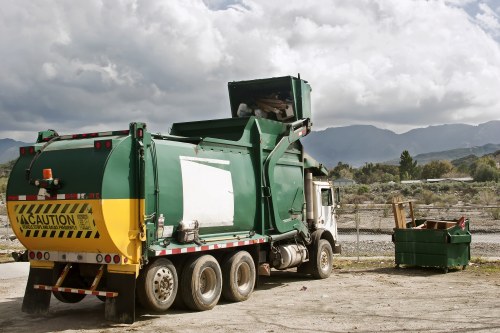
Communication and worker engagement
Effective communication is central to a successful safety culture. Staff briefings, toolbox talks and safety notices are used to share information about safe working methods and identified risks. Employees are encouraged to raise safety concerns and to suggest improvements; these inputs are considered as part of the company's ongoing health and safety review process.Contractors and third-party providers
Contractors engaged to deliver elements of skip hire services must demonstrate that they operate in accordance with equivalent health and safety standards. This includes providing evidence of suitable risk assessments, method statements, insurance and relevant training. The company reserves the right to refuse or suspend work by any third party that fails to meet expected safety standards.Compliance and legal responsibilities: The policy reflects the company's commitment to meet applicable health, safety and environmental obligations. While not a legal advice document, this policy aligns with best practice for waste carriers, skip hire operators and freight movements, and it is reviewed in light of changes to regulations or operational requirements.
Review and approval: This Health and Safety Policy is reviewed at least annually or following significant operational changes, incidents or regulatory updates. Management is committed to providing the resources necessary to implement, maintain and improve safety arrangements so that all skip hire and rubbish removal activities are carried out without undue risk to people or the environment.